Boone’s “Homegrown” Bourbon: Big Proof, Young Whiskey, and a Pour That Needs More Time
Big Proof, Young Whiskey, and a Pour That Needs More Time
Some bourbons are young and exciting. Some are young and promising. And some are young in a way you can smell before you even take the first sip.
Boone’s “Homegrown” Bourbon falls into that last category.
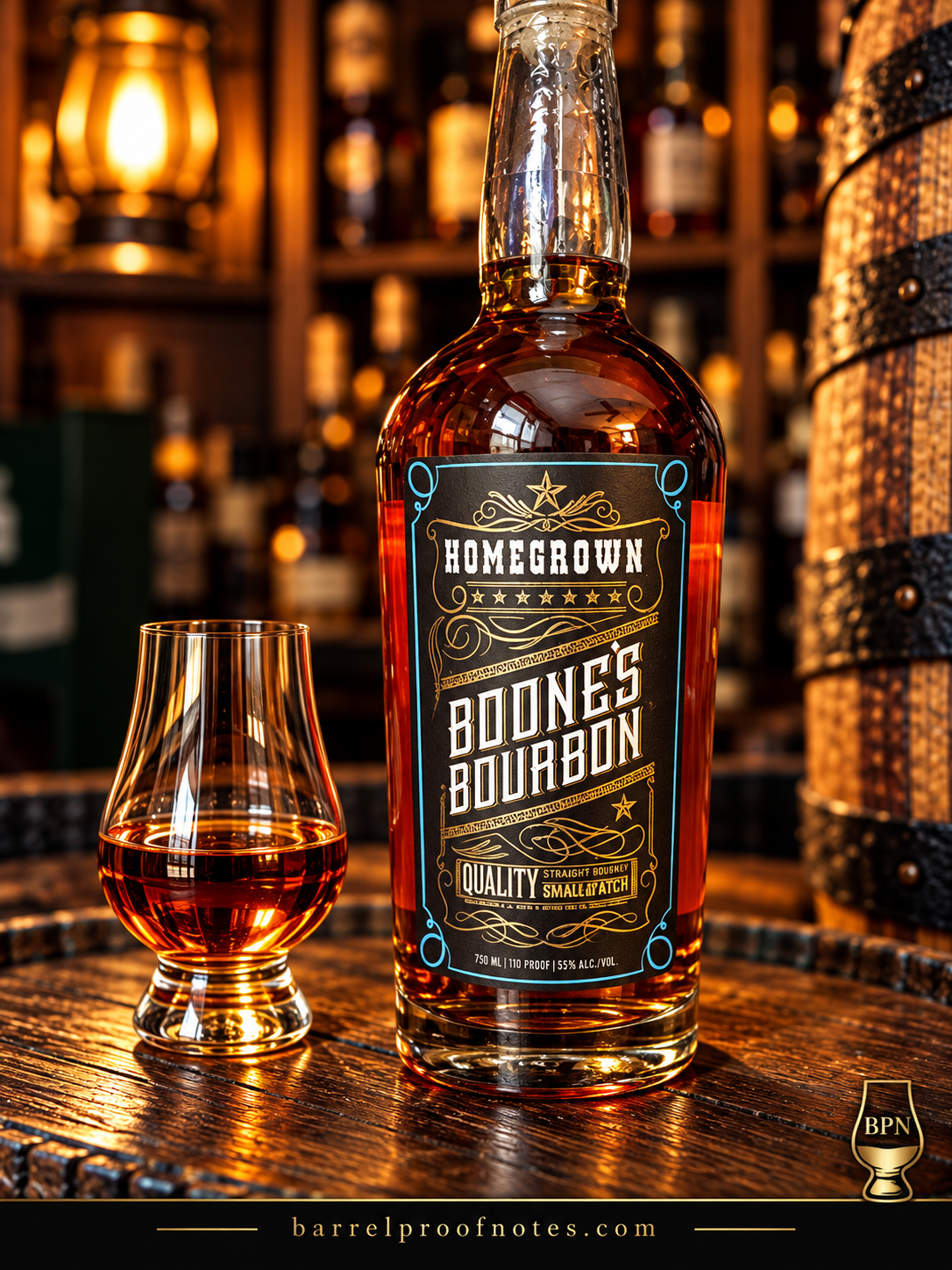
This is a 117-proof, cask-strength bourbon associated with American singer/songwriter Tyler Boone. The mash bill is listed as 75% corn, 21% rye, and 4% barley, which puts it comfortably within bourbon territory from a grain standpoint. The label’s age statement says it has been aged a minimum of six months in charred white oak barrels.
That last detail matters. A six-month bourbon can be bourbon. But six months is not much time for a high-proof whiskey to round out, soften, deepen, and become the kind of bourbon most enthusiasts expect when they see a cask-strength bottle. And in the glass, that youth shows.
The Bourbon Question: Can Six Months Really Be Bourbon?
This is the first thing we need to address. Yes, it can.
Bourbon does not have to be aged two years unless it is labeled straight bourbon. The two-year requirement applies to straight bourbon, not basic bourbon. A bourbon aged less than four years must disclose its age, which is why the six-month age statement on this bottle is important. So legally, the issue is not whether it can be bourbon. The real question is whether six months is enough time to become a good bourbon.
For our palate, not yet.
Appearance — 2.50 / 5
In the Glencairn, this came across as light gold and thin.
That is exactly what we would expect from a very young bourbon. There was not much visual depth, not much richness, and not much of that mature amber color we usually associate with time in charred oak.
Published notes describe this as coppery amber, but our glass did not show that level of color. Interestingly, an independent review from Rickhouse Ramblings also described the whiskey as light golden/sherry in color and thin in the glass, which lines up much more closely with our experience.
Aroma — 2.00 / 5
The nose was where the youth became hard to ignore. We got a very young, underdeveloped aroma. The rye was definitely present. The corn was also easy to detect. But instead of mature caramel, oak, vanilla, or baking spice leading the way, the aroma leaned closer to new make, young grain, and high-proof heat.
The brand’s published notes mention caramel-corn, cloves, pepper, and vanilla. We understand where the caramel-corn and pepper notes come from, but we did not find the nose especially polished or mature. The rye and corn were present, but the barrel influence felt underdeveloped.
Flavor — 2.25 / 5
On the palate, this was better than the nose, but still rough around the edges.
We picked up caramel, pepper, and a definite rye bite. The 21% rye shows up clearly. That part of the mash bill gives the bourbon some structure and spice, but at this age and proof, the rye bite feels more sharp than balanced.
The published flavor notes describe caramel, warm butter, cinnamon, smokiness, and apple. We found the caramel and spice, but not enough maturity or barrel depth to carry the proof. The flavor was not empty, but it felt unfinished. High proof can be a great thing when the whiskey underneath has enough age and structure to support it. Here, the proof gets ahead of the bourbon.
Finish — 2.25 / 5
The finish was medium in length, spicy, young, and high proof. There is warmth, but not the kind of deep, rounded warmth we look for in a mature cask-strength bourbon. It comes across more like heat and spice than a developed Kentucky hug. The rye pepper lingers, and the youth continues to show through. Other reviewers have reached a similar conclusion, describing the whiskey as hot, rough around the edges, immature, and showing the limits of very young whiskey at 117 proof. That matches our experience closely.
Published Notes vs. Our Notes
The published profile paints this as a sweet, smoky, spicy bourbon with caramel-corn, cloves, pepper, vanilla, warm butter, cinnamon, apple, and a cinnamon-forward finish.
Our tasting was much less generous. We did find caramel, pepper, rye spice, and corn. Those overlap with the official description. But we did not find enough maturity, oak integration, or balance to support the sweeter published profile. The biggest difference was this. The published notes read like a bourbon with a finished, rounded profile. Our glass tasted like a bourbon still trying to become that.
Barrel Proof Notes Score
| Category | Score |
|---|---|
| Appearance | 2.50 / 5 |
| Aroma | 2.00 / 5 |
| Flavor | 2.25 / 5 |
| Finish | 2.25 / 5 |
Barrel Proof Score: 2.25 / 5
Final Call
Boone’s “Homegrown” Bourbon has an interesting story, a bold proof point, and a mash bill that should have potential. But potential is the key word.
At a minimum of six months old, this bourbon tastes too young for us. The proof is high, the rye is present, and there are flashes of caramel and spice, but the whiskey needs more time in the barrel and more age in the rickhouse before it can deliver the depth and balance we look for in a cask-strength bourbon. This may eventually become a bourbon worth revisiting. Right now, it feels like a work in progress.
Final Call: This one is not for us in its current form, but we would be interested to see what this whiskey becomes with more time, more maturity, and more barrel influence.